Risk Management
Most traders do not fail because they lack a strategy.
That statement surprises many people because the trading industry constantly promotes new indicators, new systems and new ways to enter the market. As a result, traders spend years searching for the perfect strategy while completely ignoring the one skill that determines whether they survive long enough to become profitable.
Risk management.
Across Rwanda, thousands of traders know how to identify support and resistance levels. Many understand candlestick patterns. Some can even perform technical analysis better than experienced traders.

Yet many of them continue to lose money. Why?
Because knowing where to enter a trade is only one part of trading. What happens after you enter the trade is often more important.
A trader can be right about market direction and still lose money. Another trader can be wrong several times in a row and still remain profitable over the long term,the difference is usually risk management.
Professional traders understand that trading is not about winning every trade. It is about surviving long enough for probabilities to work in your favour. Every trade carries uncertainty. No setup is guaranteed. No strategy wins forever.
This is why experienced traders focus more on protecting capital than chasing profits,lets focus on how we can put this in action.
Position Sizing
Have you ever increased your lot size because you felt confident about a setup?,Almost every trader have done it,maybe the setup looked perfect, Maybe the market was reacting exactly as expected, maybe you had already won a few trades earlier in the week, so you decided to risk more then the market moved against you.
One trade suddenly erased several days of progress,This is one of the most common reasons traders struggle with consistency,professional traders do not allow confidence to determine their position sizing,They allow rules to determine their position size and here we have a tool our traders use to calculate their risk per trade according to their account size,so they dont loose more than they planned instead they gain confidence from their risk management which is first step to profitability because your mind and heart will be at peace while in a trade
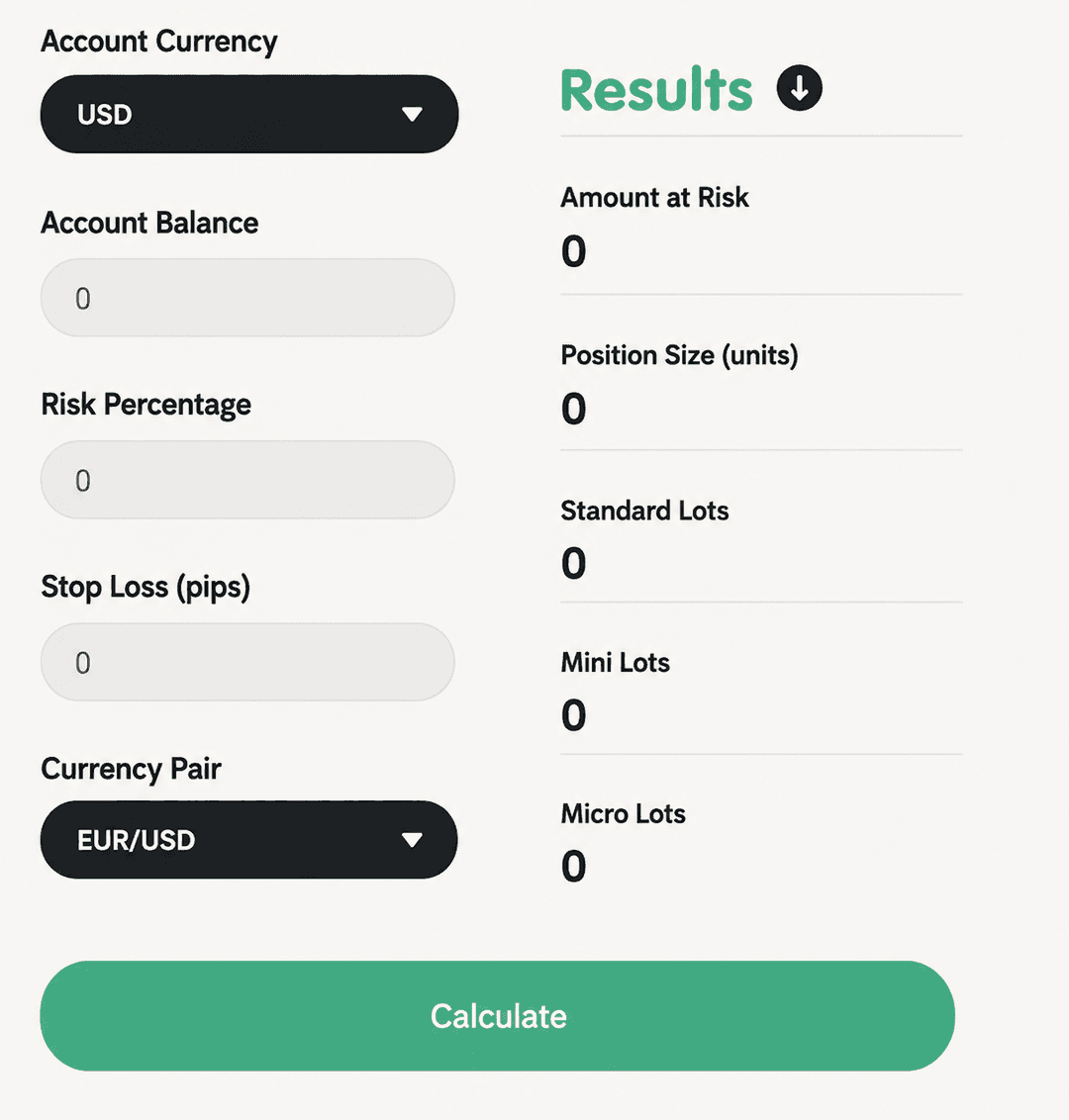
This tool will help you alot bacause The market does not know how confident you feel. The market only does what it wants to do.This is why successful traders calculate risk before entering every trade and make sure no single trade has the power to seriously damage their account, so Always make sure you calculate your risk properly according to your account, which is what i teach in my trading community, we focus on what making more traders fail,then we build from that.
Risk-To-Reward
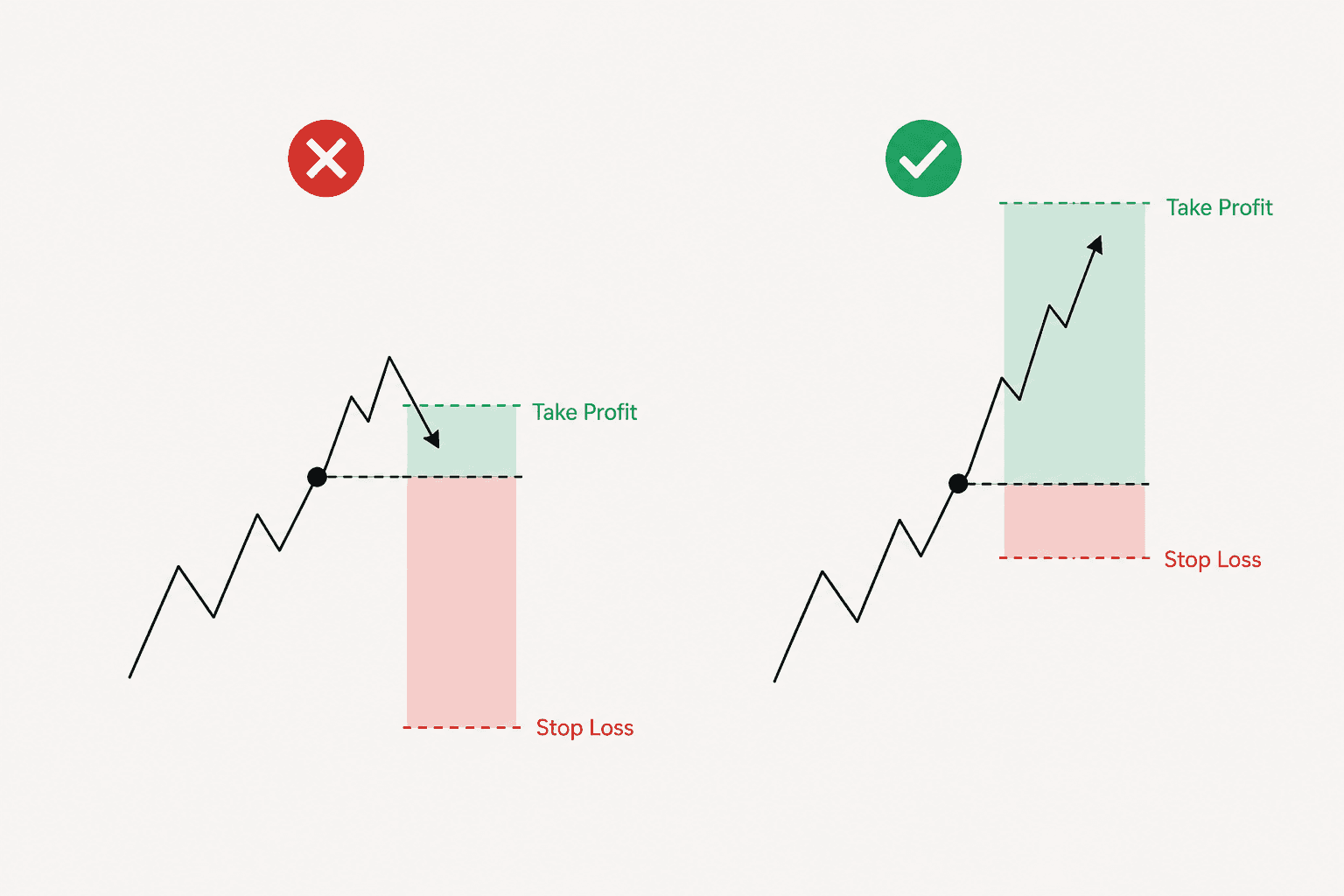
Many traders become obsessed with being right,Professional traders become obsessed with being profitable. There is a huge difference,A trader can win seven trades out of ten and still lose money if their losses are larger than their winners.
At the same time, another trader can win only four trades out of ten and still make money if their winners are significantly larger than their losses,This is the power of risk-to-reward.
Instead of asking "How often can I win?", professional traders ask "How much can I make when I am right compared to how much I lose when I am wrong?"That small shift in thinking changes everything,
Maximum Daily Loss
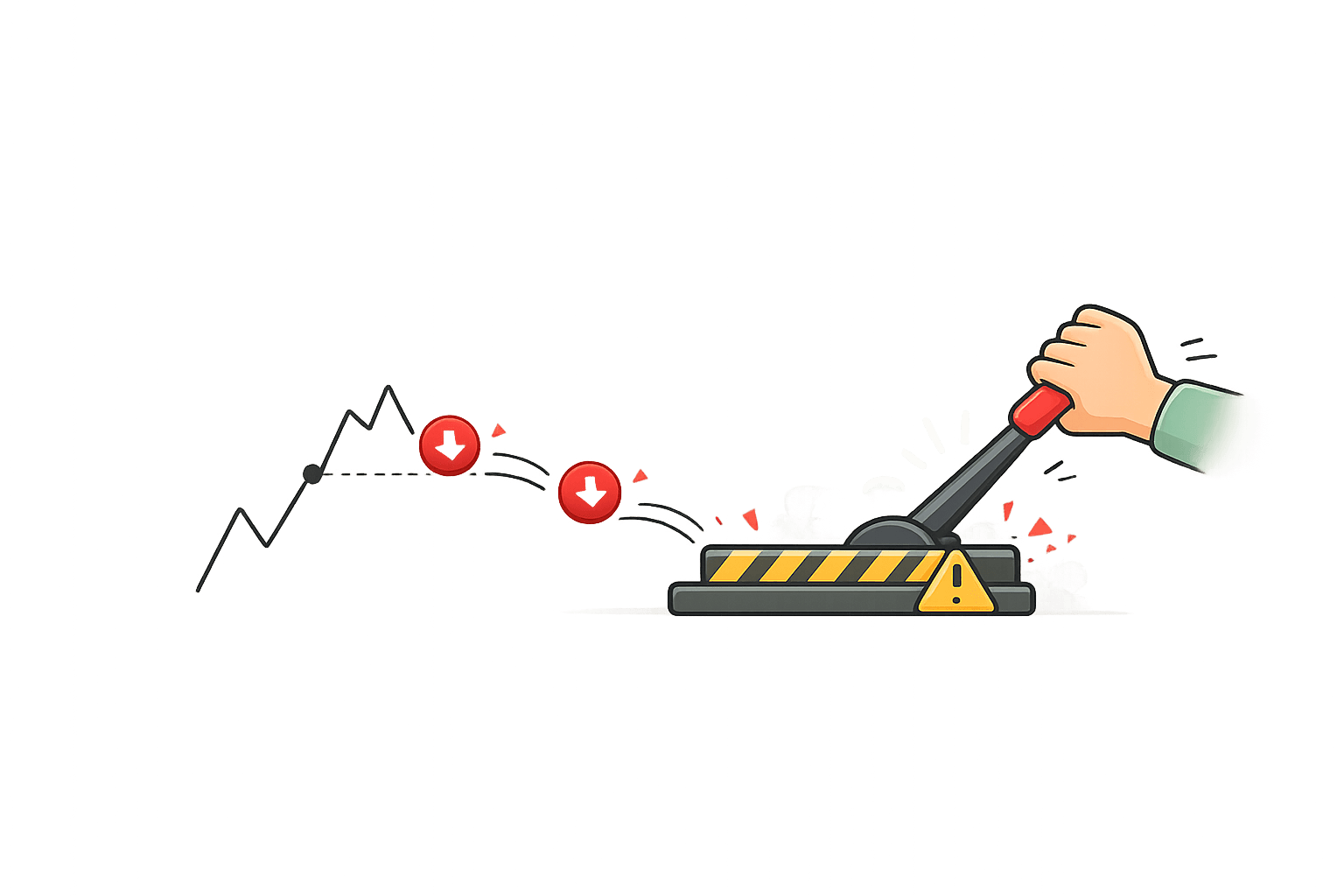
One losing trade is normal. Two losing trades can happen. Three losing trades can happen,the real danger begins when emotions take control
Many traders experience a losing streak and immediately try to recover the money. They increase lot sizes, abandon their trading plans and start taking low-quality setups,what began as a small loss quickly becomes a major setback.
This is why i teach my traders to have a maximum daily loss limit, Once that limit is reached, trading stops not because the trader is weak, but because discipline is more important than emotion.The market will still be there tomorrow so dont trade like there is no tommorrow,know this, "you will survive tommorrow only if you survived today in the markets"
Maximum Weekly Loss
Same applies on weekly loss sometimes the market is not the problem sometimes the trader is there are weeks when focus drops, discipline disappears and performance is simply not where it should be, professional traders understand this and step back before temporary mistakes become permanent damage ,incase you are in a loosing week remember its just a loosing week,you can still have a winning month at the end, so don't allow that one week create weakness in your account.

Account Preservation
Most beginners think about growth. Professionals think about survival,If you lose your account, the opportunities that appear tomorrow no longer matter because you dont have anything to trade anymore,you just lost it today,this is why experienced traders often repeat a simple principle
Protect First. Grow Second.
When traders adopt this mindset, they stop chasing every opportunity and begin focusing on quality over quantity.
Psychological Discipline
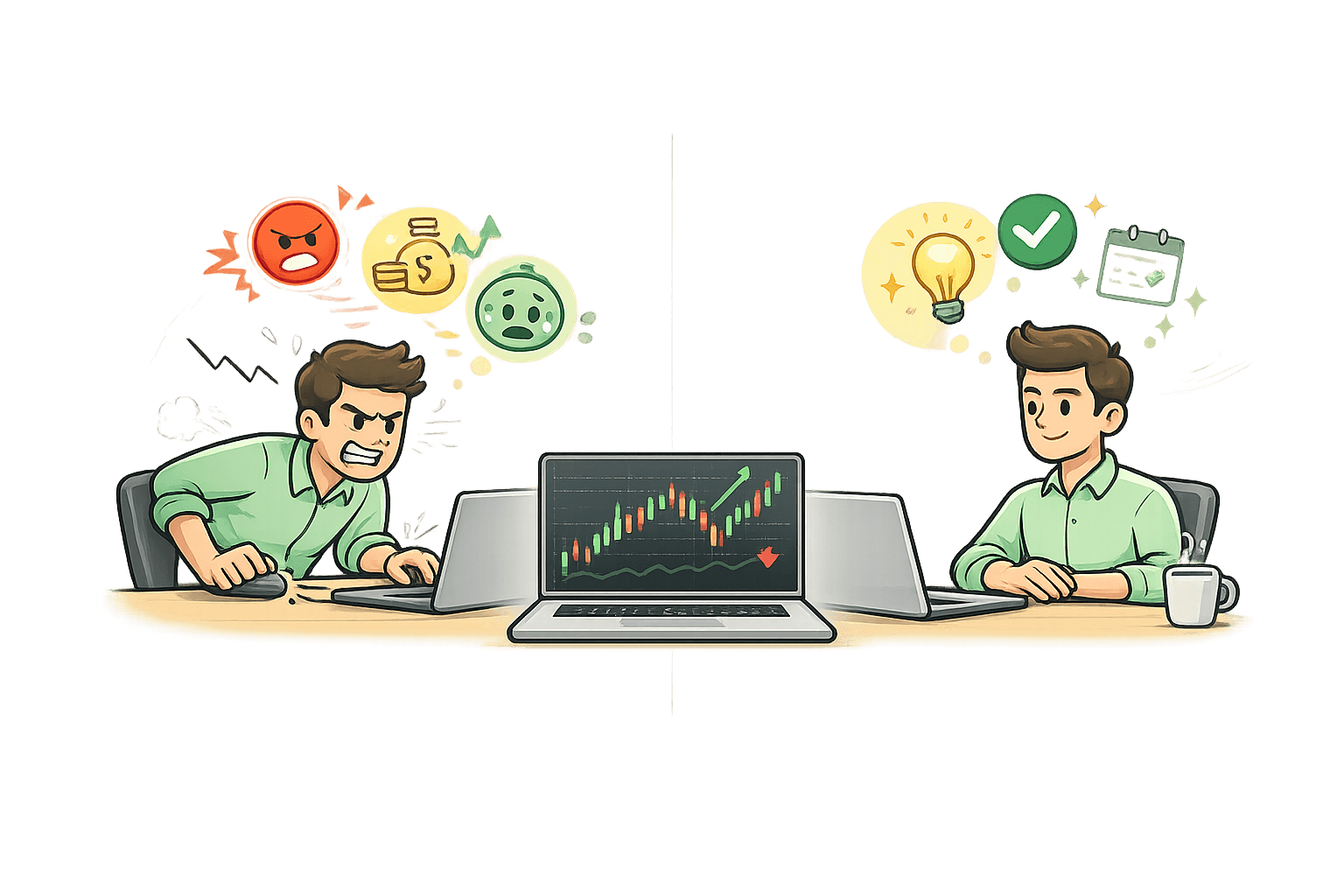
The hardest part of trading is rarely analysis. It is disciplin,most traders already know what they should do,the challenge is actually doing it consistently,fear causes traders to close winning trades too early,greed causes traders to risk more than they should,frustration causes traders to revenge trade,hope causes traders to hold losing positions longer than planned,
The market constantly tests emotions, the most successful traders are not those who predict every market move, they are the ones who remain disciplined regardless of whether they are winning or losing.
.
At SUGIRAForex Academy Best Forex trading academy in Rwanda, members learn how professional traders manage risk, control emotions and build consistency through mentorship,accountability and real-world market discussions.
Ready To Trade alongside serious traders?
Join the SUGIRAForex Community and learn how disciplined traders manage risk, protect capital and stay consistent through changing market conditions. Gain access to mentorship, discussions and a community focused on long-term trading success.
Explore Membership Plans↗Trade Management
Entering a trade is only the beginning many traders spend months learning how to find entries, identify setups and predict market direction,yet once they finally enter a trade, they often have no clear plan for what happens next, this is where trade management becomes important
Across Rwanda, many traders correctly identify market direction but still struggle to become consistently profitable. The reason is often not the entry itself. The problem is how the trade is managed after entry,professional traders understand that entering a trade and managing a trade are two completely different skills,so how do we put that in action ?
Holding Winners
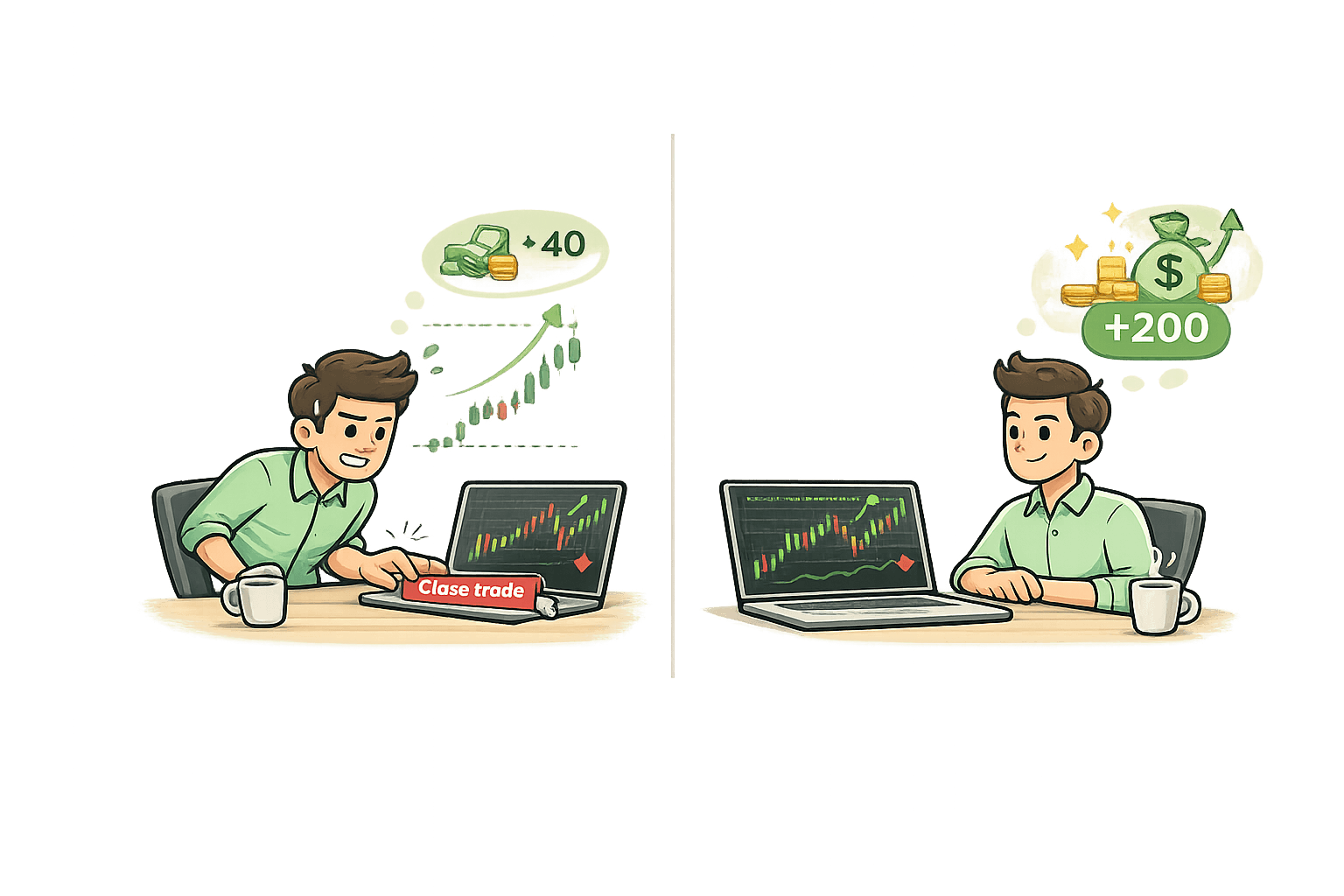
One of the most common mistakes traders make is closing profitable trades too early,the moment a trade moves into profit you start to think of what That small profit can buy,"oooh 40$ let close and buy a new watch",so fear begins to appear then traders start worrying that the market might reverse and take away their gains, as a result, they exit too soon and miss the larger move they originally anticipated.
Professional traders understand that large winning trades often make a huge difference to long-term profitability,learning how to hold quality trades is an essential skill ,you find yourself holding losses praying for the market to come back,Why can't you do the same in a profitable trade and hold it too,guess what? you are not alone, infact you are one step to overcome this because you are here, worry no more !!!!
Managing Risk During A Trade
Risk management does not stop once a trade is opened,experienced traders continuously evaluate whether market conditions are still supporting their original idea if circumstances change, they adapt while remaining disciplined and their protecting capital.
Lets say you opened a trade and after two or three hours,the markets moves in your favour and there you are feeling nice!!!,thats obvious!! then after a couple of minutes the market structure starts to shift from your original entry direction anticipated,this happens alot and what always happens is what to do right ? did you know you can lock your profits ? did you know you can lock your capital while in a trade ?
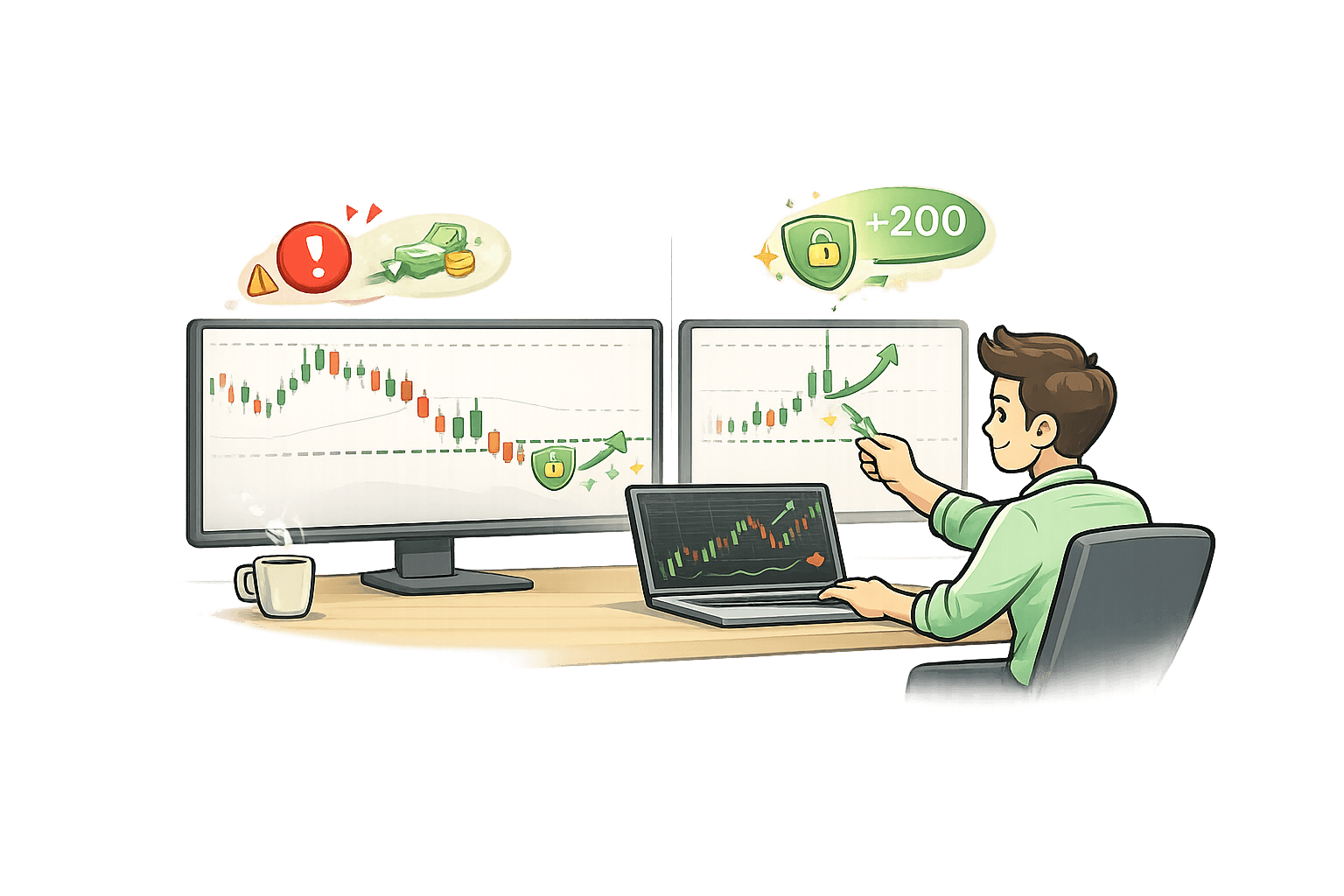
Moving To Break Even
Many traders use break-even management as a way of reducing risk once the market has moved sufficiently in their favour,however, moving to break even too early can also remove traders from strong opportunities,this is why experienced traders focus on structure and context rather than emotions when making management decisions ,so what do you do here?
Wait for the market to move away significantly from your entry by 3/4 to your target,that means from there the structures have shifted,the highs and the lows have shifted ,so that means the location of your entry is now a zone which will symbolise a shift in structure ,thats where your stoploss should be. from There you are risk free even if the market reverses you won't loose anything. Then let the market complete 4/4.
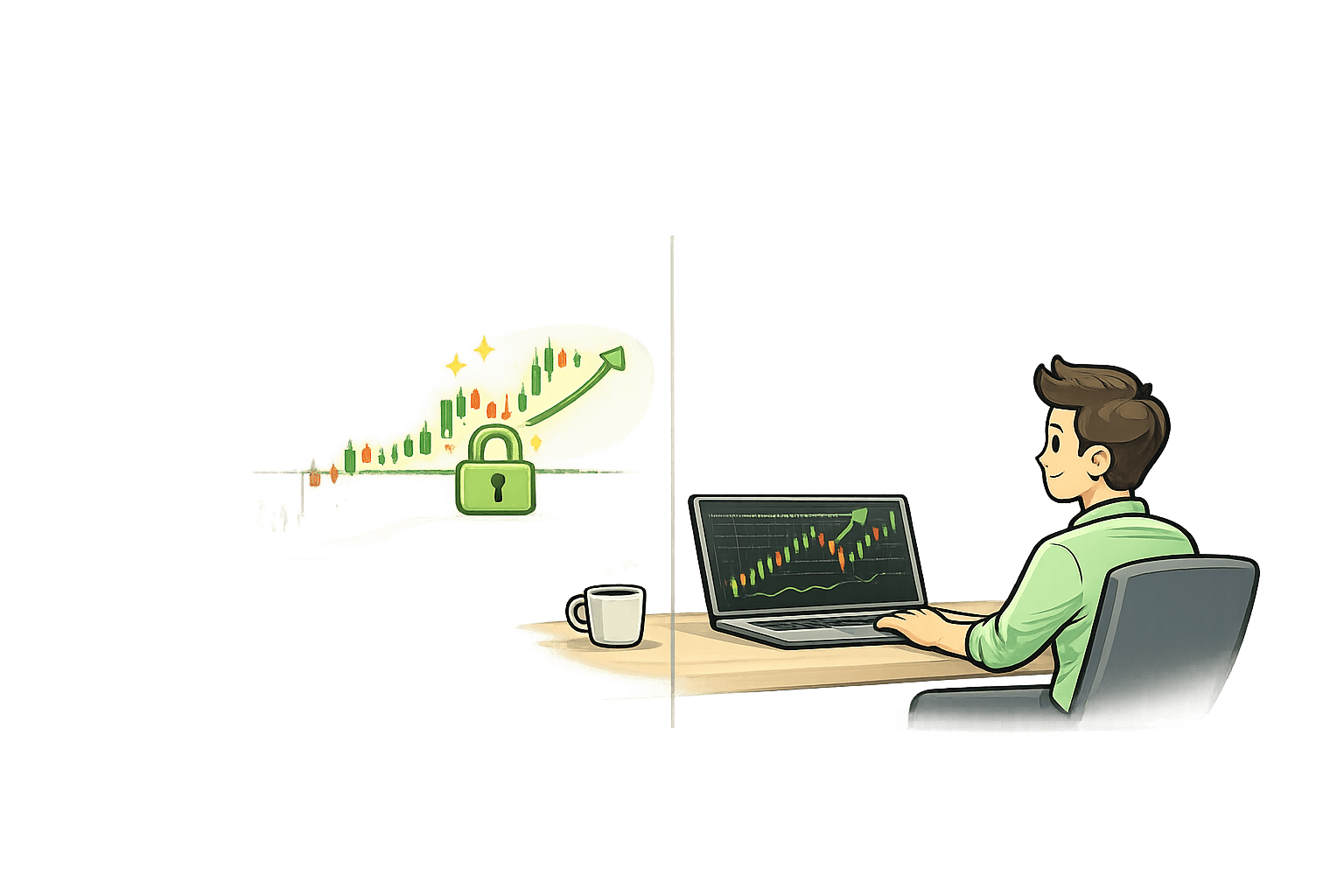
Scaling Out
Professional traders often secure partial profits while allowing the rest of the position to continue running,this approach can help reduce emotional pressure while still allowing traders to participate in larger market moves without breaking their rules,just by simply scaling out what the markets offered them.
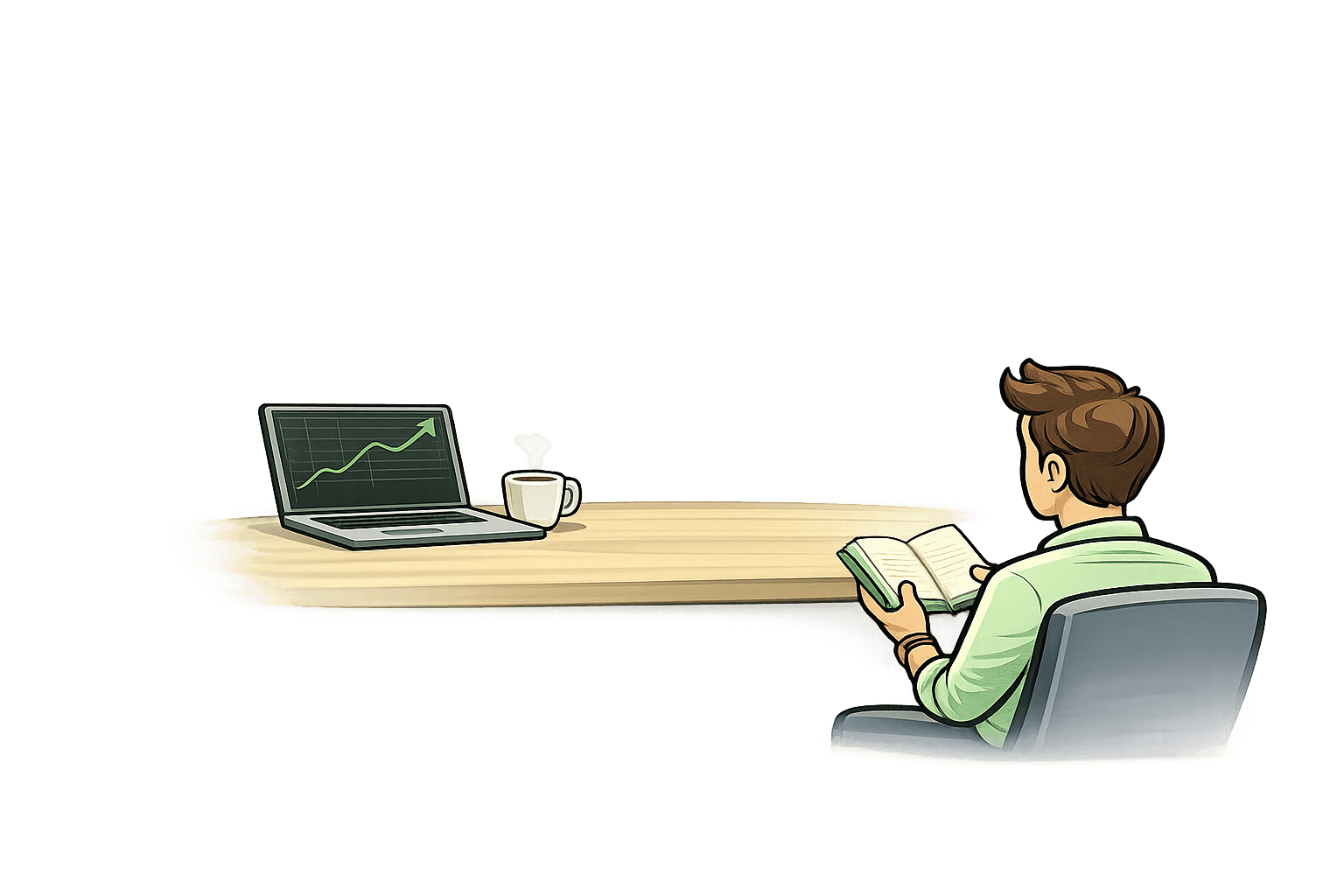
Letting Trades Breathe
Markets does'nt move in a perfectly straight line,even the strongest trends experience pullbacks, pauses and temporary retracements,traders who understand this are less likely to panic during normal market behaviour.
Once you understand that,your mind is at peace regardless market present conditions,remember these days when you are in a profitable massive trade,and you start to experience market pullbacks,which is normal ! Then you start to feel like all your profits are decreasing ,panicking to close the trade to find the markets is pumping all the way back to your direction,you feel bad right !? guess what, the next day you repeat that again and it have became part of your trading behaviour.
Professional traders allow their trades to breath, as well they accepted the risk before they opened the trade no matter the condition, so,you may miss big opportunities trying to play safe, Allow that trade breath.
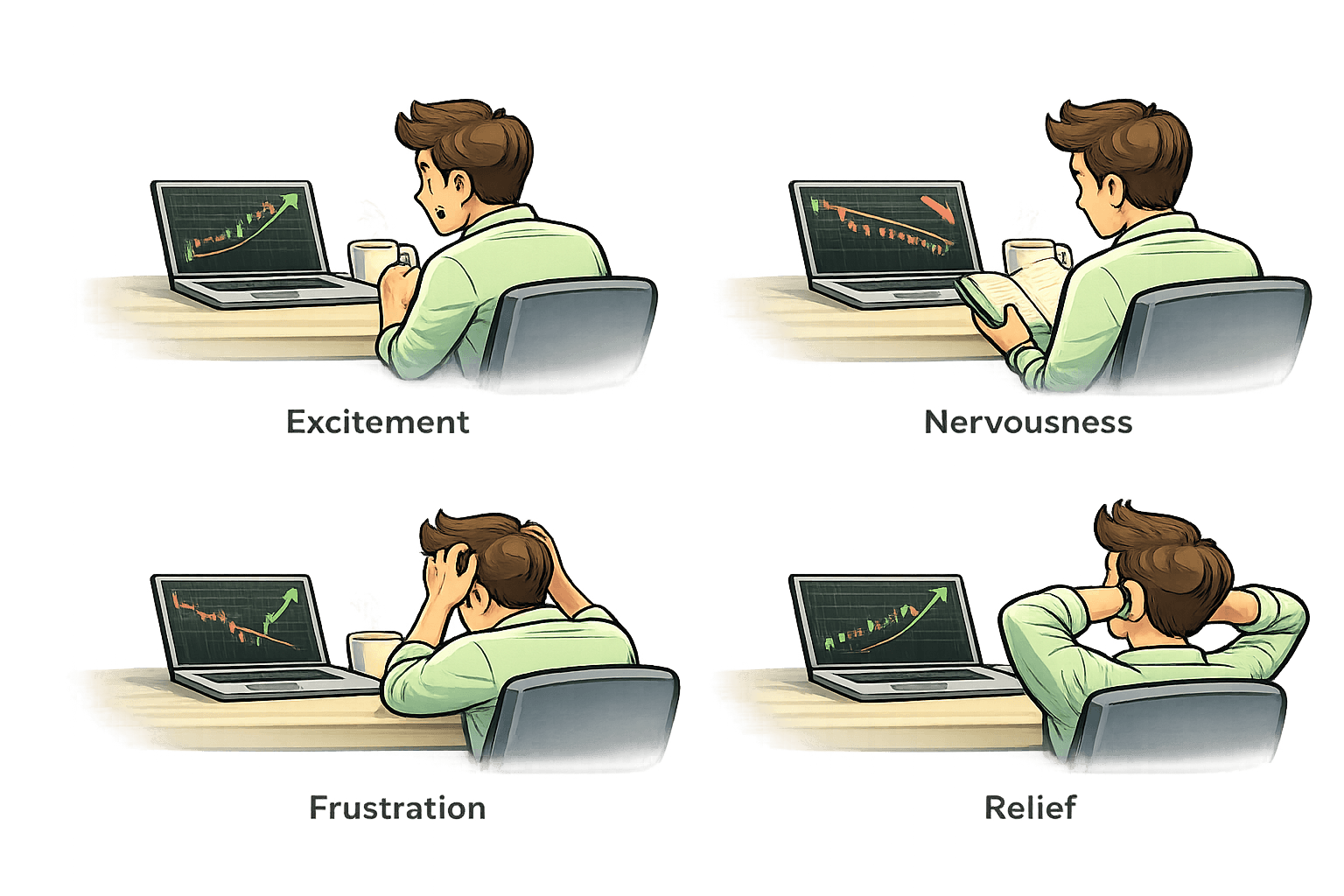
Managing Emotions After Entry
Many traders believe the hard part is finding an entry,in reality, the emotional challenge often begins after entering the trade, every price movement can trigger fear, greed, hope or frustration.Successful traders learn how to follow their plan despite these emotions
Remember as a trader your first step is to understand the risk,know your entries,trust your strategy then allow your trades breath.Once you understand That ,your profitability is arround the corner.
At SUGIRAForex Academy, members learn how experienced traders manage open positions, protect profits and develop the patience needed to stay consistent in changing market conditions.
Are you ready To put this into action?
SUGIRAForex Community will train you how experienced traders manage open positions, protect profits and build consistency through mentorship, discussions and practical market guidance.
Explore Membership Plans↗Direction Analysis
Many traders believe entries are the most important part of trading,they spend countless hours searching for indicators, candlestick patterns, confirmations and secret strategies while completely ignoring the one thing that determines whether a trade even deserves to be taken in the first place.
Direction.
Across Rwanda, many traders enter trades because they see a setup. Professional traders enter trades because they understand where the market is most likely trying to go,the difference may seem small, but it changes everything.
When you begin analysing direction before searching for entries, trading becomes less random, more structured and significantly easier to manage.
Market Direction Comes First
Imagine a trader in Kigali opening Gold, EURUSD or NASDAQ every morning, the first thing they do is search for a buy or sell opportunity, unfortunately, this is exactly how many traders end up fighting the markets. Professional traders approach the market differently. Before looking for an entry, they first ask:
"Where is this market trying to go?"
This simple question immediately eliminates many poor trading opportunities, instead of reacting to every candle, they focus on understanding the larger story being told by price.
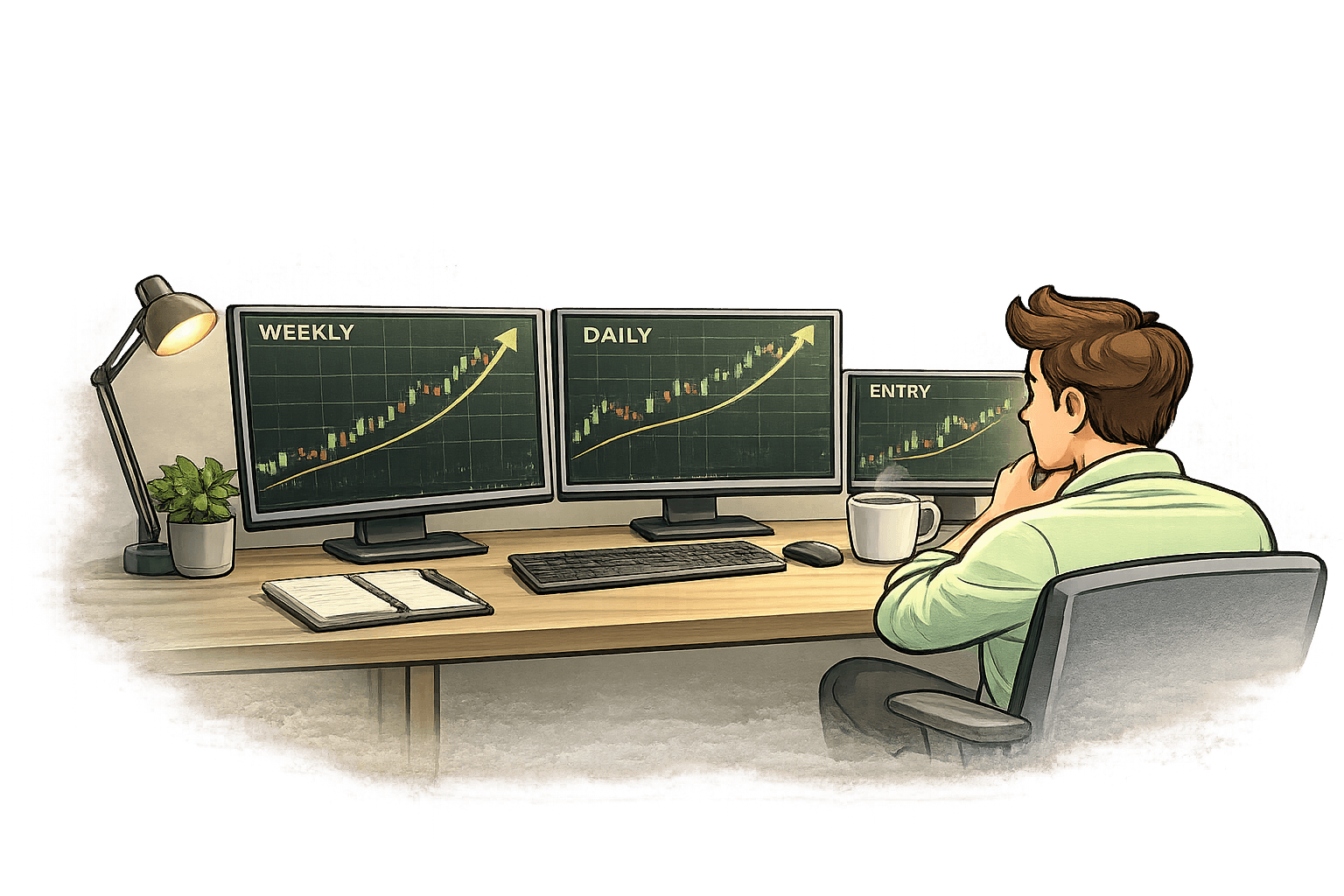
Think of direction as a destination, without knowing where you are going, every road looks acceptable and an easy to pass, but once the destination becomes clear, decision making becomes much easier,maybe you may ask yourself which system you can use to analyse the directionof the markets ? thats where SUGIRAForex Academy comes in.
Higher Timeframe Bias
One of the most common mistakes traders make is becoming obsessed with lower timeframes, they open the 5-minute chart and immediately begin searching for trades. the problem is that lower timeframes contain a large amount of noise, price can appear bullish one moment and bearish the next.
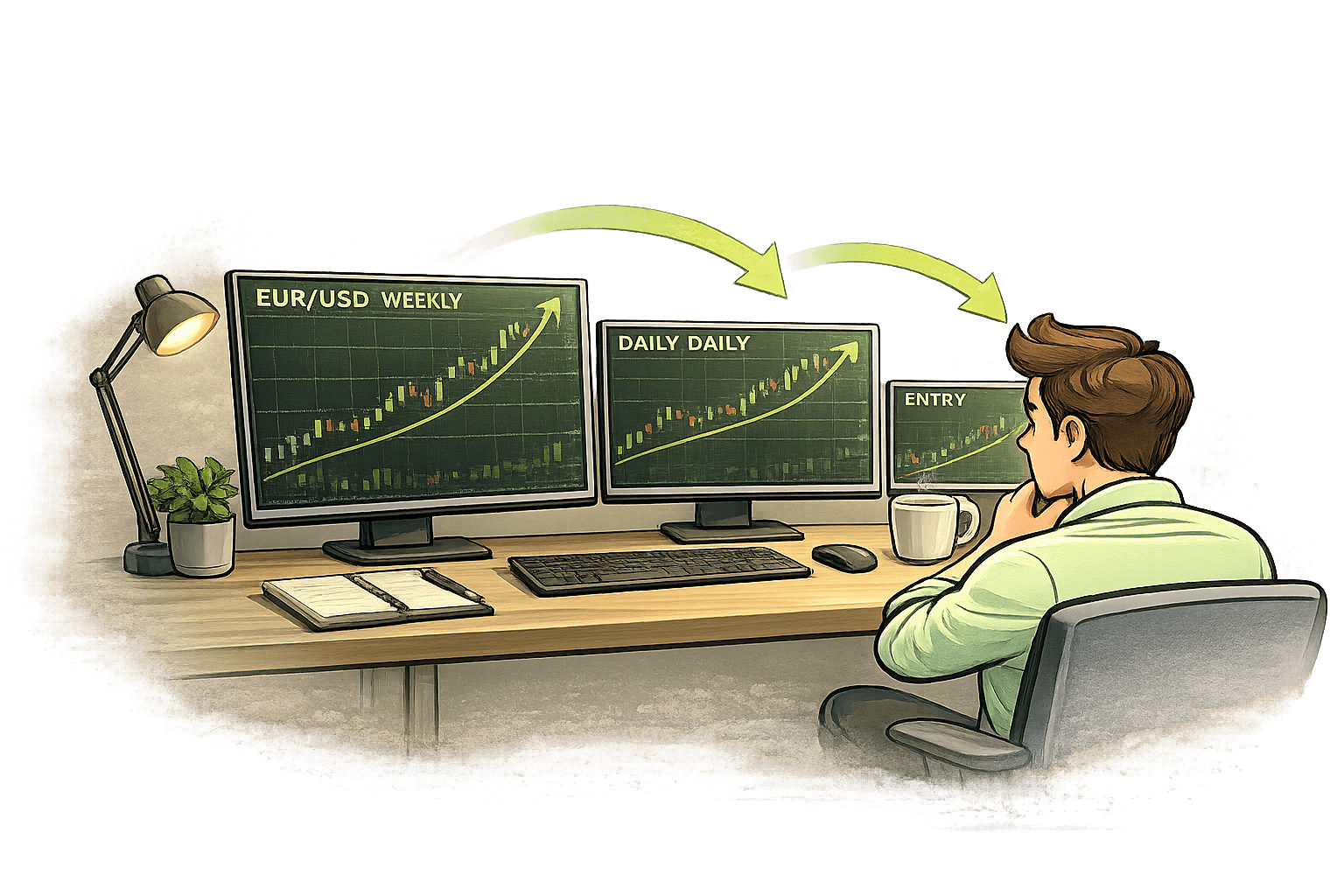
Professional traders zoom out before they zoom in,they start by analysing larger timeframes such as the Weekly, Daily and 4-Hour charts, this helps them identify where institutions, funds and major market participants are likely positioning themselves.
Once a higher timeframe direction has been established, lower timeframes become tools for execution rather than tools for prediction,many experienced traders eventually realise they were never struggling with entries,they were struggling because they ignored the bigger picture,
Ask yourself this question,if i want to build a mansion and looking for its best location in Kigali, will i go and watch from down inside Nyabugogo or atleast i will go way far like shyorongi mountain where i can observe the whole city first ? ,apply that mindset to the chart.
Understanding Market Structure
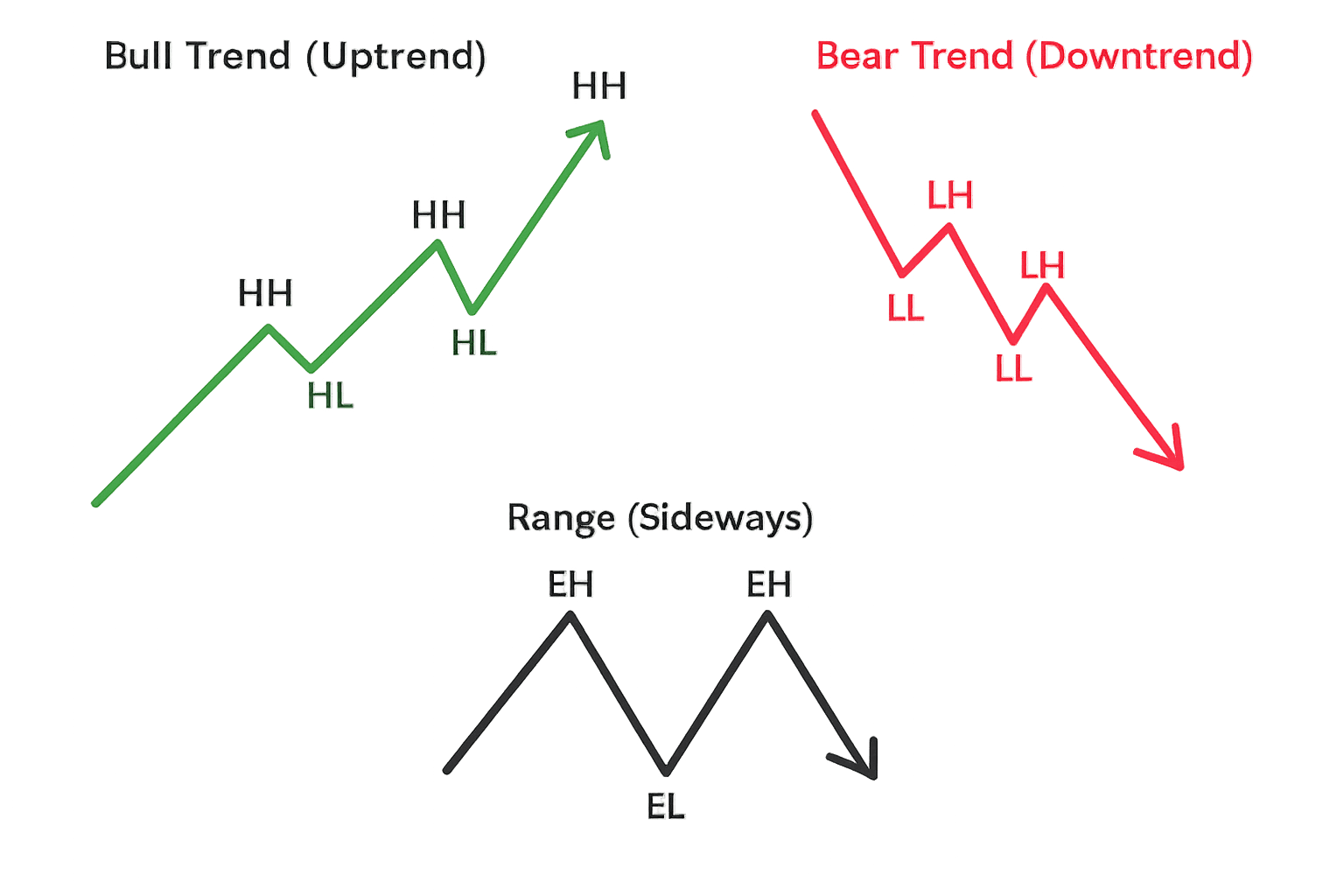
Every chart tells a story,the challenge is learning how to read it,professional traders use market structure to understand who currently has control of price. When buyers are in control, markets often create higher highs and higher lows. When sellers dominate, markets often create lower highs and lower lows.
Understanding these simple concepts allows traders to see beyond indicators and focus directly on price behaviour. This is one of the reasons experienced traders often remove unnecessary indicators from their charts. The information they need is already visible through structure.
Market structure provides context, and context helps traders make better decisions.
Stop Fighting The Market
One of the fastest ways to destroy consistency is constantly trading against momentum, many traders become obsessed with catching market reversals, they want to buy at the absolute bottom and sell at the absolute top, while this sounds exciting, it often leads to unnecessary losses.
Professional traders understand that momentum exists for a reason, when strong buyers are pushing price higher, and constantly you are searching for sells ,this becomes an expensive habit.
When strong sellers are controlling the market, repeatedly buying every dip often produces the same result=Losses.
The market does not reward stubbornness,it rewards traders who understand how to align themselves with prevailing momentum while managing risk responsibly, the goal is not to prove you are right, the goal is to identify opportunities where probability is working in your favour.

Are you ready to get rid of these behaviours?
Join SUGIRAForex Community and learn how experienced traders analyse market direction, identify higher timeframe bias, read market structure and align themselves with momentum before entering trades.
Explore Membership Plans↗Trading Signals
Many traders believe their biggest challenge is finding the perfect strategy, indicator or entry model. They spend months switching from one trading system to another, convinced that the next strategy will finally change everything.
In reality, many traders are not failing because they lack information. They are failing because they are making every decision completely alone.
No second opinion. No trade review. No experienced trader challenging their analysis before money is placed at risk. Just a chart, a trading platform and a hope that this trade will somehow be different from the last.
Across Rwanda, thousands of traders open MT5 every day and attempt to navigate the markets entirely by themselves. Unfortunately, isolation is one of the most expensive habits a trader can develop.
Trading Alone Is Hard
Imagine a trader sitting in Kigali analysing Gold, NASDAQ or EURUSD. They identify what looks like a perfect setup and immediately enter the market.
The problem is that nobody has reviewed their analysis. Nobody has pointed out a higher timeframe resistance level. Nobody has questioned whether the market is actually trending in the direction they believe.
When nobody challenges your thinking, mistakes often become habits. And habits eventually become losses. This is why many traders spend years repeating the same cycle:
Analyse → Enter → Lose → Repeat
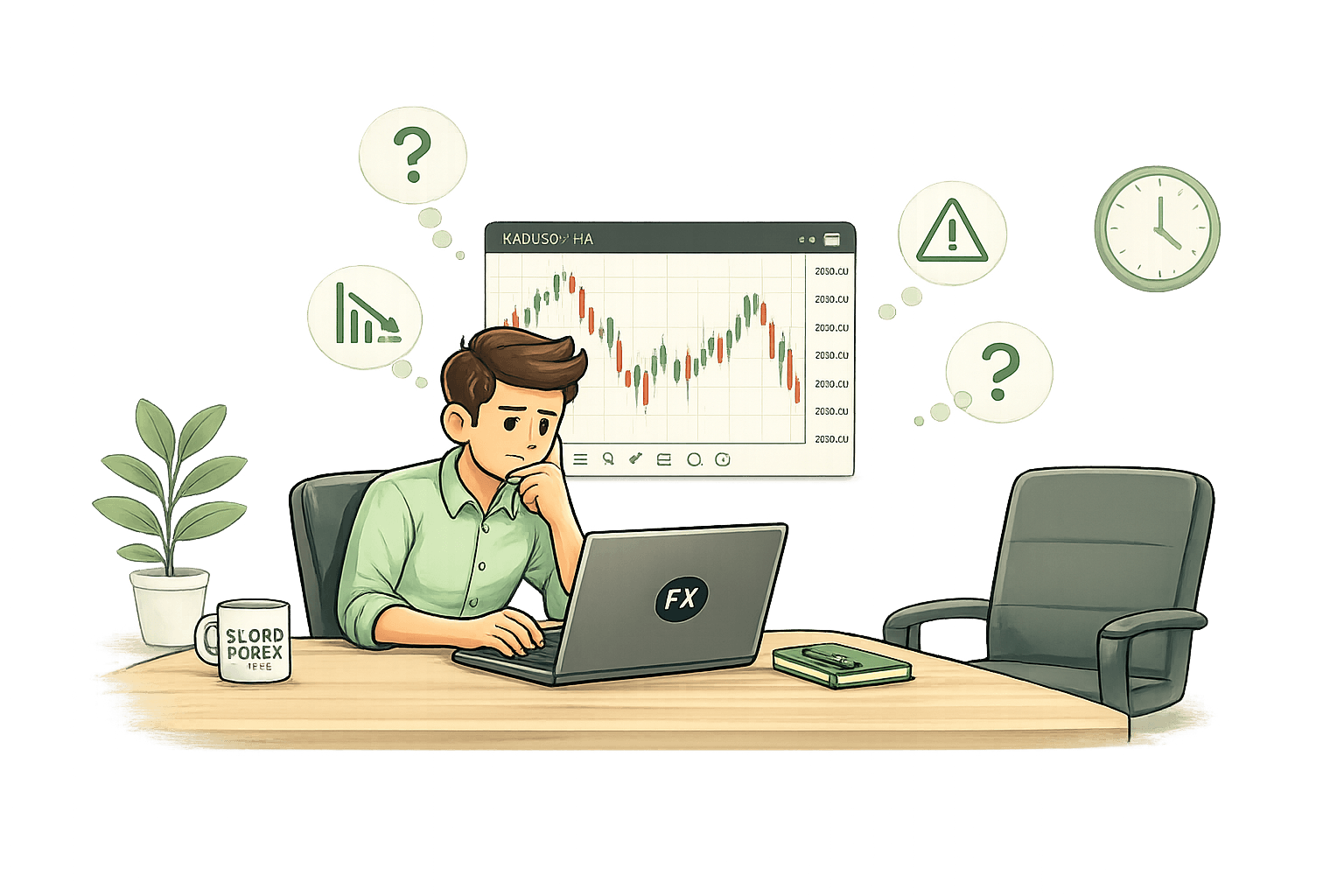
Trading can feel lonely. Every decision carries pressure because every mistake feels personal. Over time, this creates frustration, doubt and emotional decision making.
Many traders assume they need a better strategy when what they actually need is a better environment.
Why Professional Traders Share Ideas
One of the biggest misconceptions in trading is the belief that successful traders operate completely alone.
Professional trading firms, hedge funds and institutional desks rarely rely on a single individual making every decision. Instead, they use teams of analysts, researchers, risk managers and traders who constantly review, challenge and improve each other's ideas.
The goal is not dependency, the goal is clarity.
When multiple perspectives examine the same market, poor ideas are often filtered out before capital is ever placed at risk.
This collaborative approach is one of the reasons professional traders focus so heavily on communication, review and structured analysis.
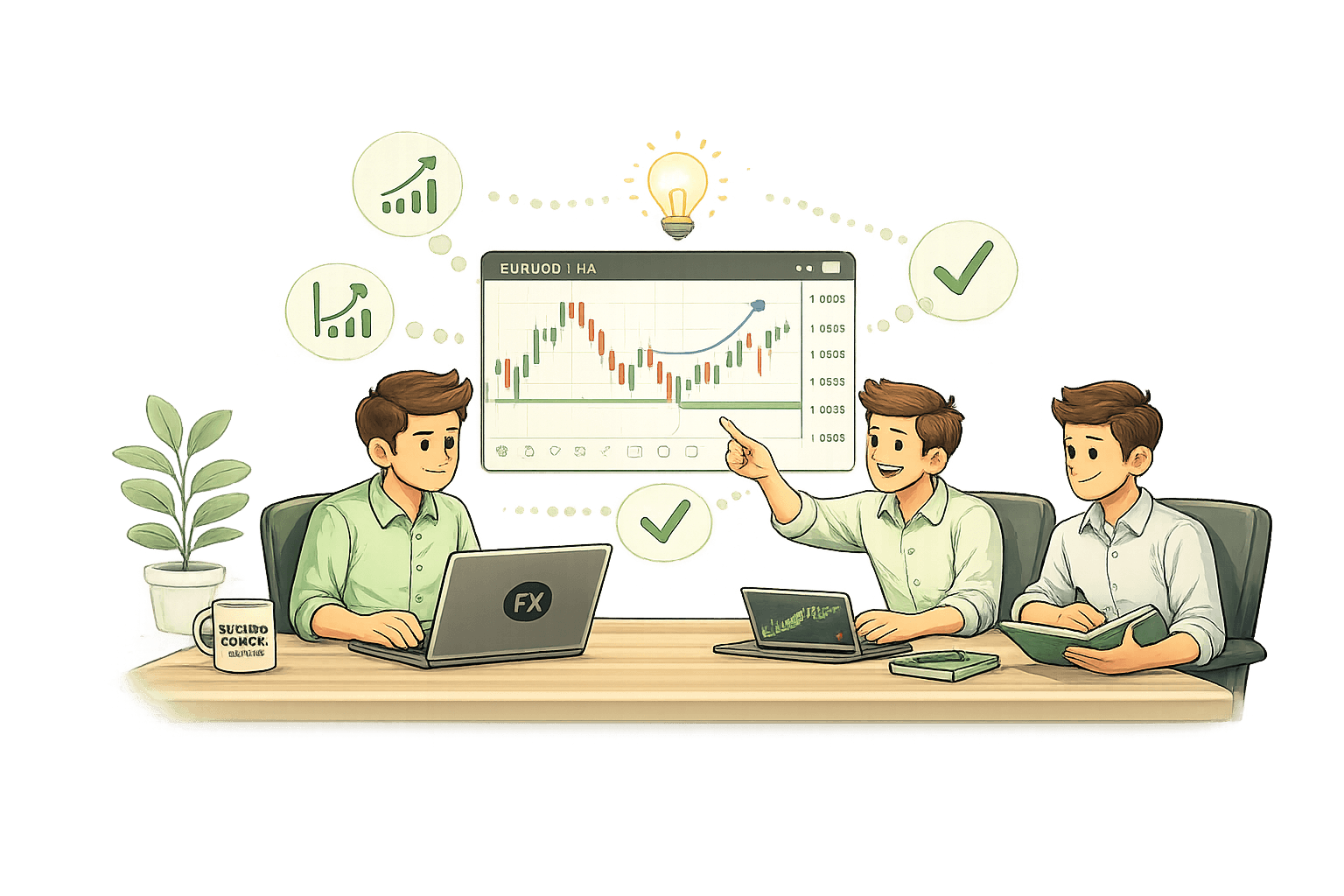
Inside the SUGIRAForex Community, traders learn alongside others who are analysing the same markets, discussing opportunities and reviewing different perspectives before trades are taken.
The objective is not to tell people what to think. The objective is to help traders think more clearly, more objectively and more consistently.
A Signal Is More Than An Entry
One of the biggest problems in the trading industry is how signals are marketed. Many communities reduce trading to a few numbers copied into a Telegram group:
BUY EURUSD • SL 20 • TP 50
Unfortunately, this teaches traders nothing. The trader knows where to enter, but has no understanding of why the opportunity exists, how risk should be managed or what conditions could invalidate the idea.
A professional signal is not simply an entry. It is a complete trading plan.
Random Signal
Entry Only
Professional Trade Idea
Complete Trading Plan
BUY EURUSD
Direction Defined
SL 20
Risk Defined
TP 50
Market Structure
No Explanation
Trade Management Plan
No Education
Reasoning Included
Direction. Risk. Management. Reasoning.
These are the factors that separate educational trade ideas from simple signal copying.
Poor Signal
SELL USDCHF NOW
Entry: 0.78381
Stop Loss: 12.9 Pips
Structured Trade Idea
Trade Journey
View the original signal and compare it with the final market result. Click on Result Achieved to see the outcome.
Signal Shared
Before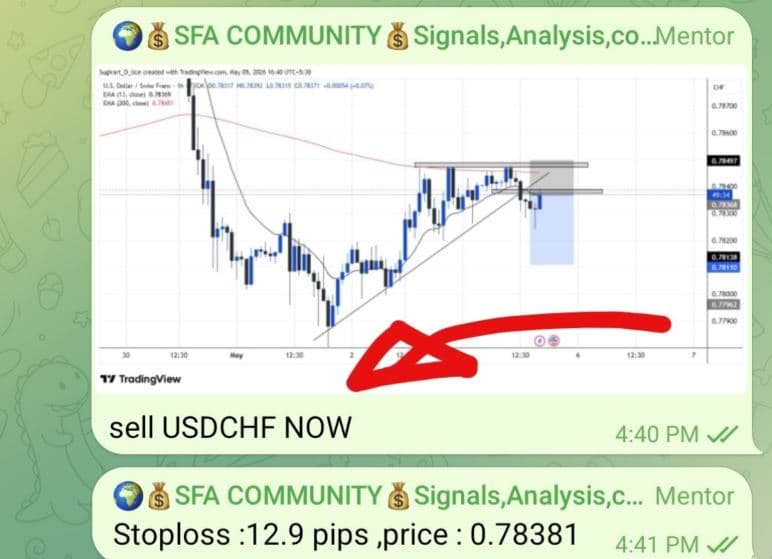
Most signal groups focus on telling traders what to do.We focus on helping traders understand why the opportunity exists, because understanding creates confidence, and confidence creates consistency.
Confirmation Beats Blind Copying
Bad traders copy,professional traders verify.
Inside the community, signals are not designed to replace analysis. They are designed to support it.Members are encouraged to review the setup, understand the reasoning and compare the opportunity against their own market perspective.
This process develops confidence because confidence comes from understanding, not copying.
Blind Copying
Reactive Trading
Confirmation
Professional Trading
Enters because someone said so.
Reviews the idea before entering.
Doesn't understand the reasoning.
Understands the setup and market context.
Panics when price fluctuates.
Has a management plan before entry.
Depends on signals forever.
Uses signals to improve analysis skills.
Focuses only on entries.
Focuses on process, risk and execution.
Learning Through Signals
Every signal inside the SUGIRAForex Community becomes a live case study,members can observe how opportunities are identified, how risk is managed,how trade management decisions are made and how experienced traders respond when market conditions change.
Over time, this creates something far more valuable than signal dependency,it creates understanding, the goal is not to create traders who follow signals forever,the goal is to create traders who eventually understand how to find these opportunities themselves.
Real Trading Opportunities
Every signal shared inside the community includes direction, risk management, trade planning and educational context. These are real opportunities shared with members before the market moved.
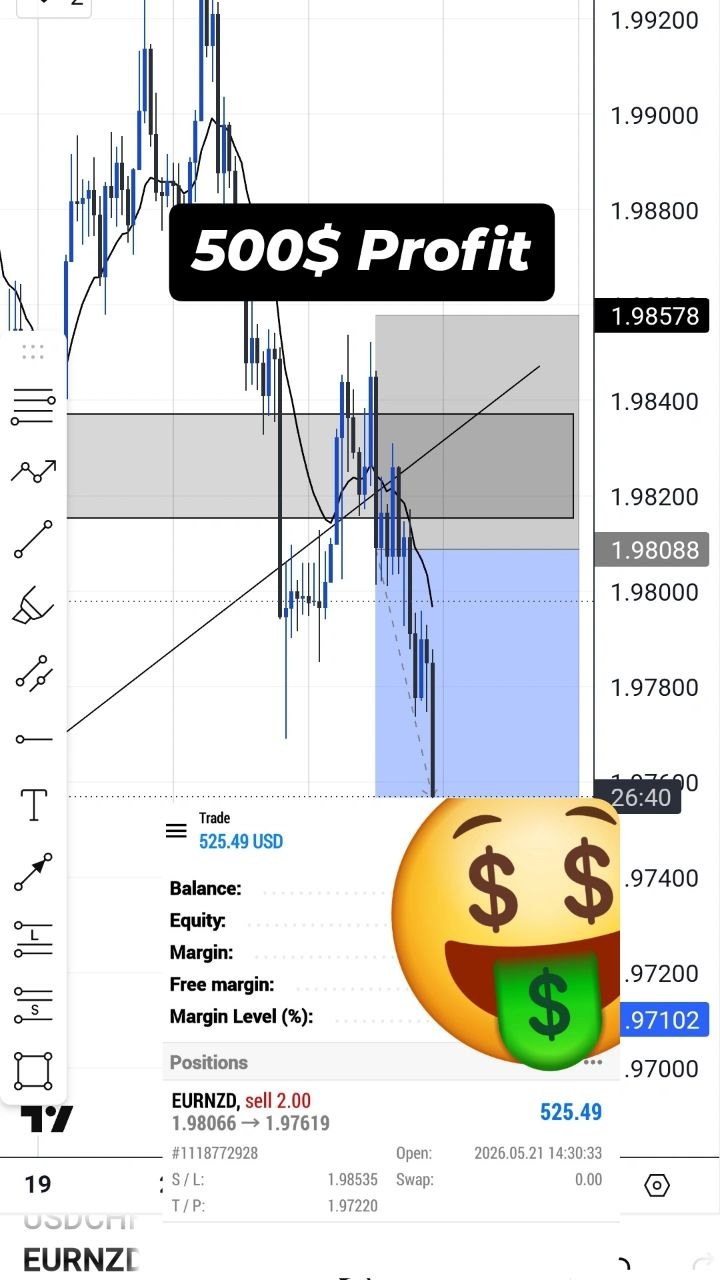
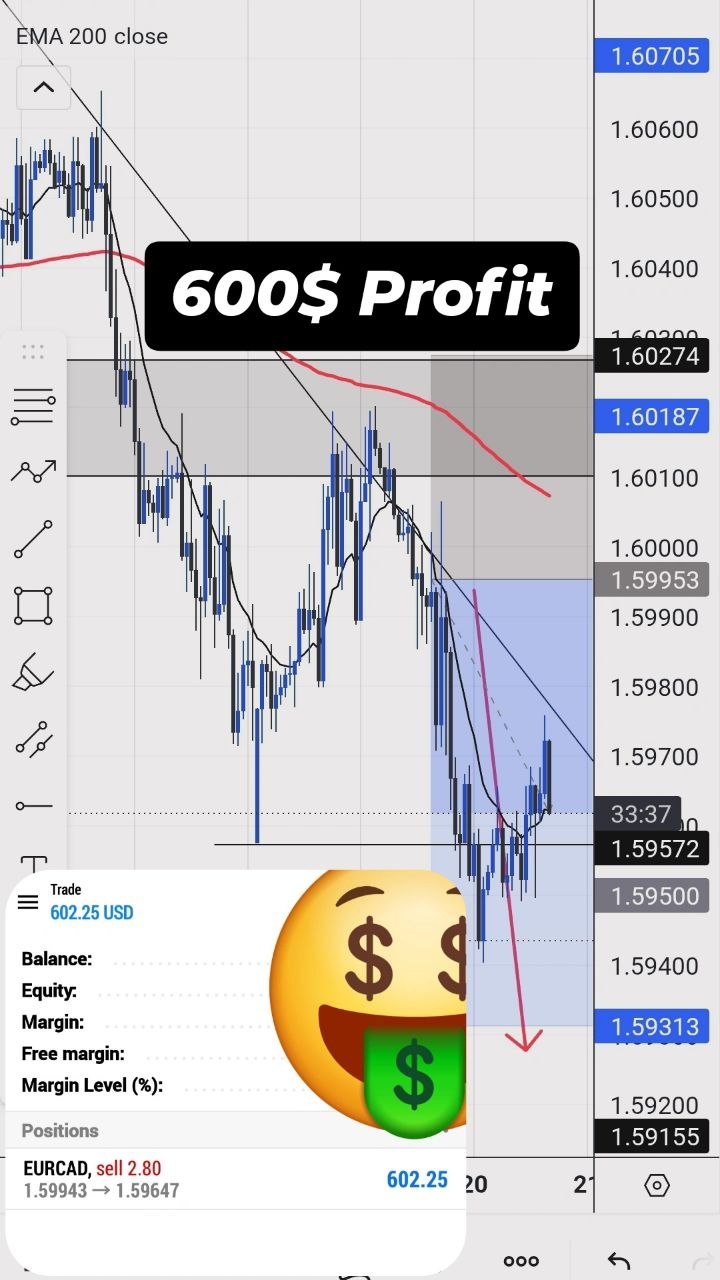
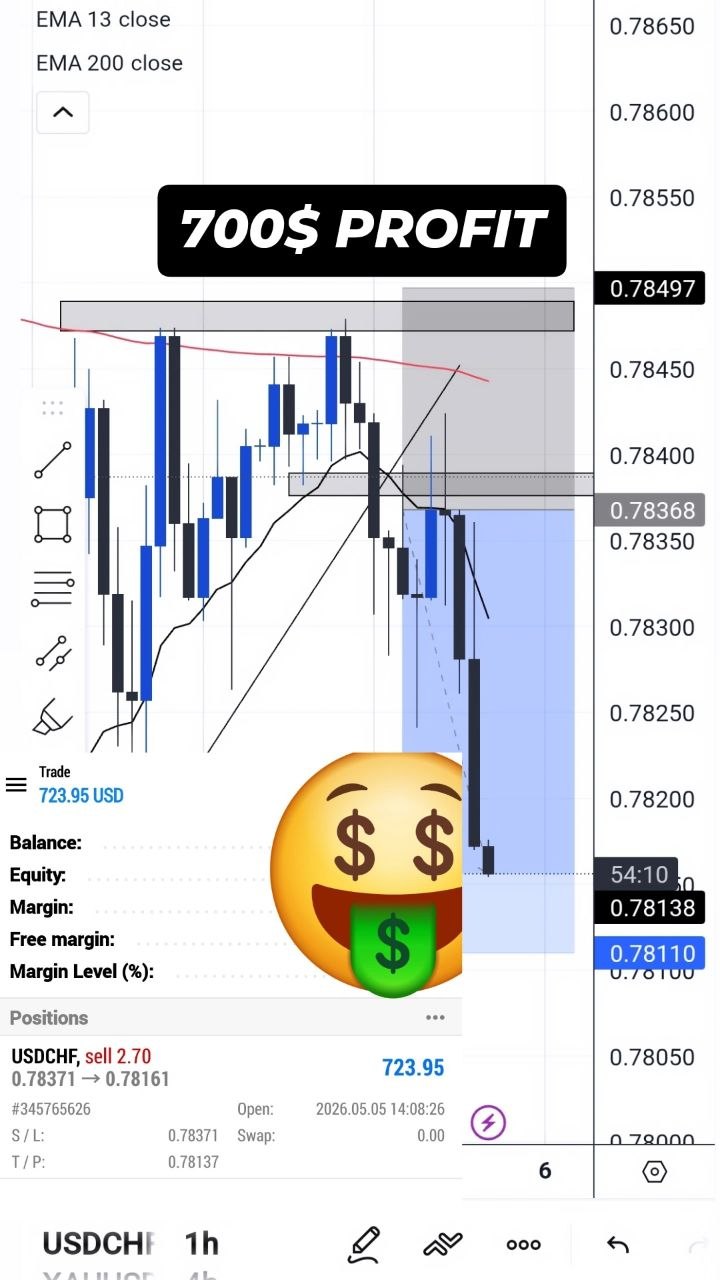
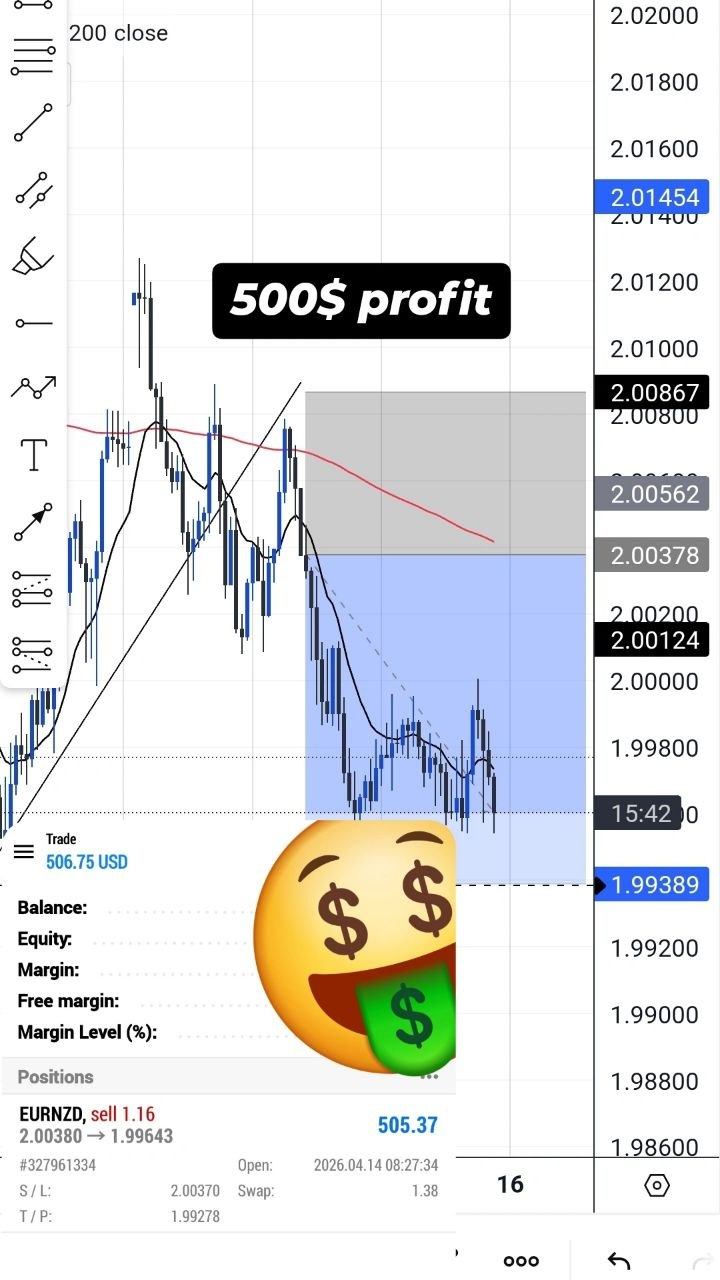
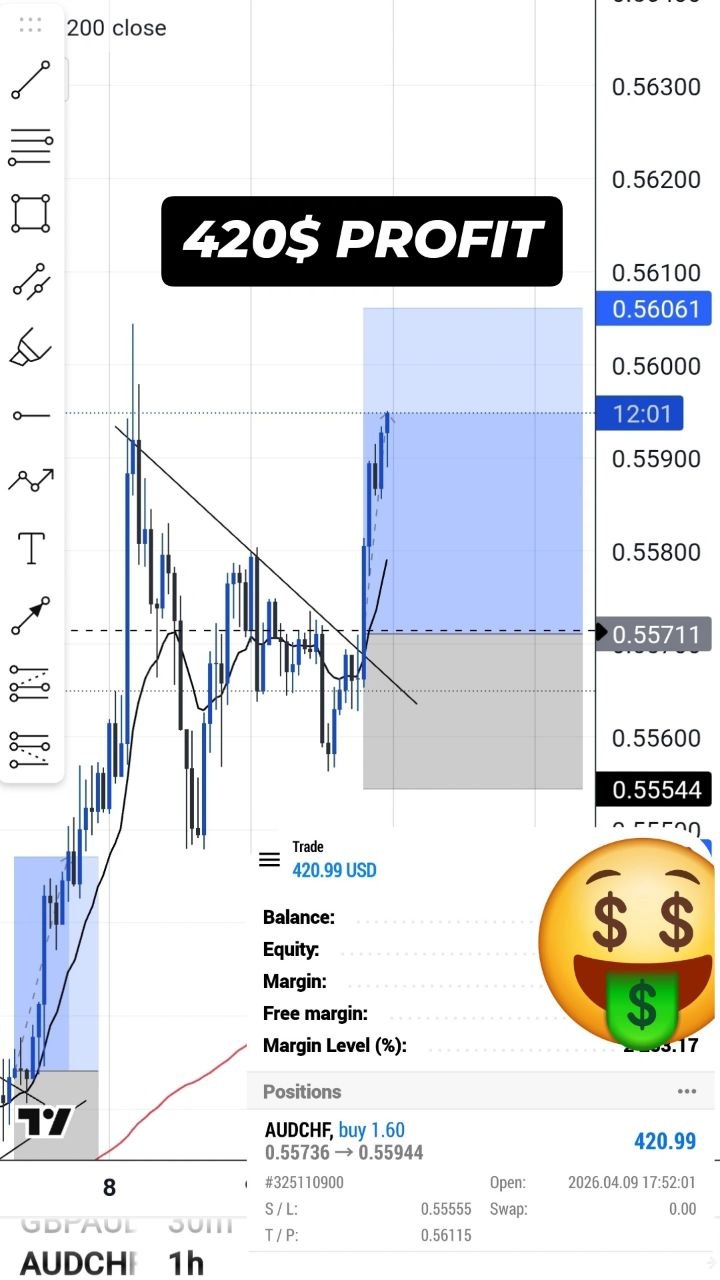
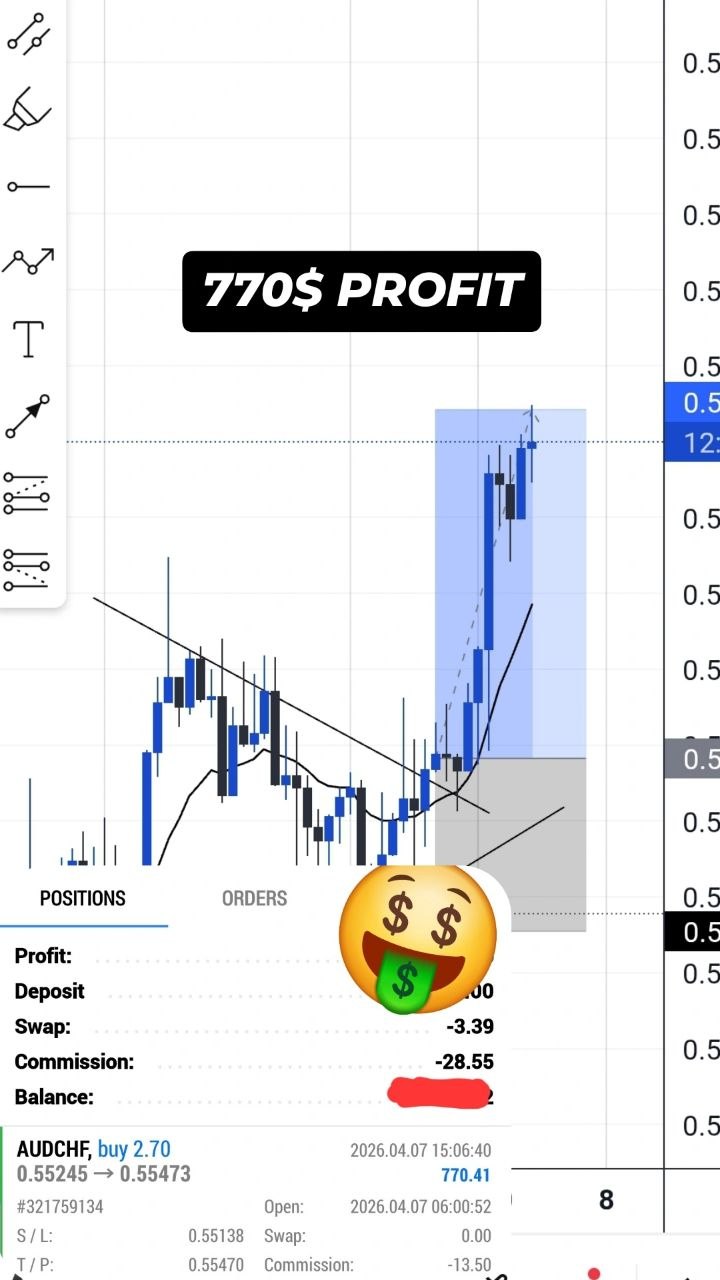
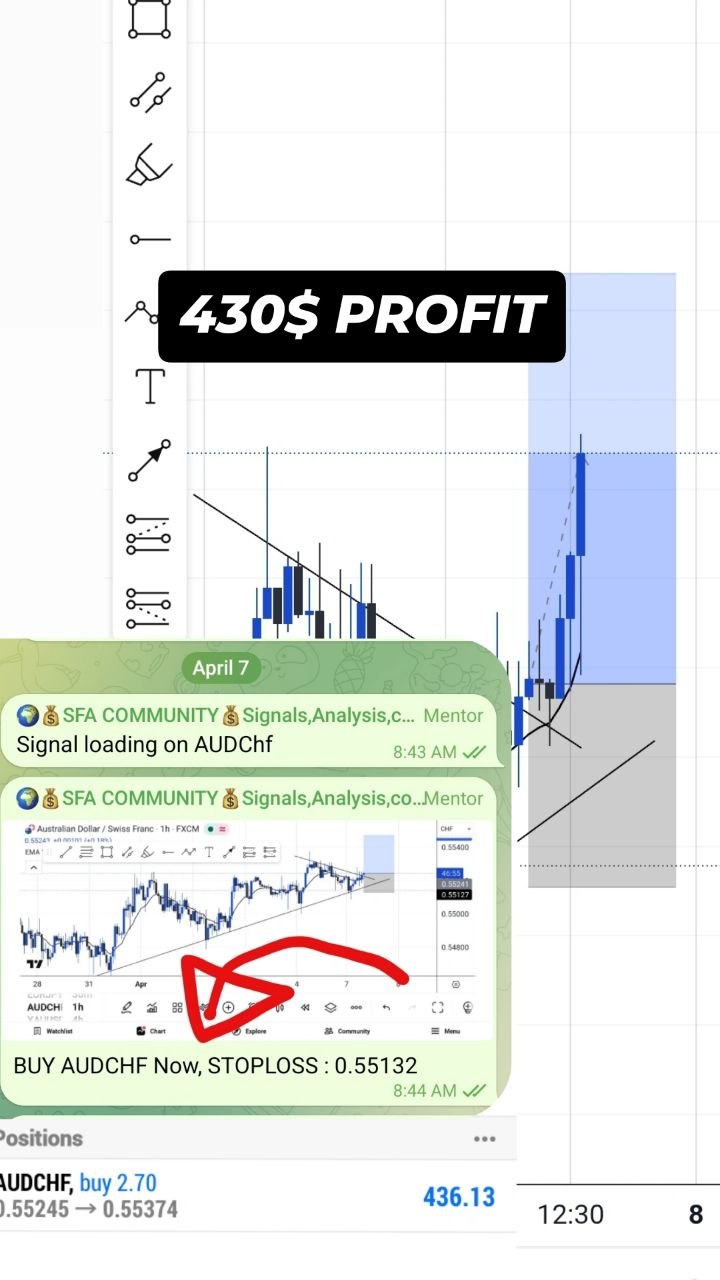
Signals are shared with market reasoning, risk management and trade updates to help traders learn while they execute.
Stop Trading Alone.
Join the SUGIRAForex Community and learn alongside traders who analyse markets, review opportunities, discuss trade ideas and grow together through structured education, signals and mentorship.
Explore Membership Plans↗